

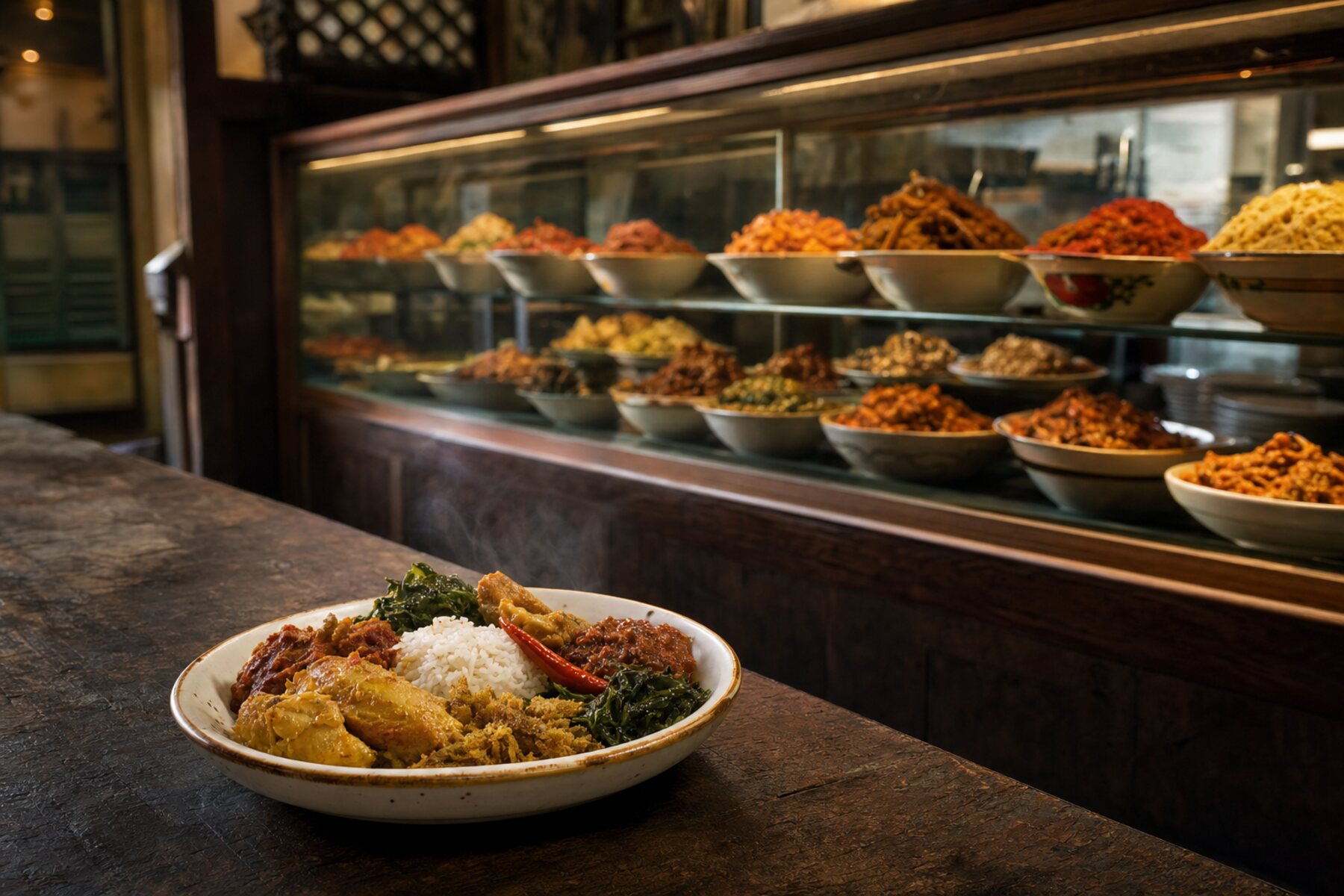
Start with the rendang
Beef rendang is the dish most people use to judge a nasi padang counter, and for good reason. Real Minangkabau rendang is cooked slowly in coconut milk and spice for hours until the liquid reduces and the spice paste clings to the meat.
Look for beef that is dark brown, close to the colour of strong coffee, with the gravy cooked down rather than pooling. The meat should be tender enough to pull apart with a spoon. A pale, saucy beef curry can be delicious, but it is a different dish.
Many counters also serve ayam kalio or a kalio of beef, which is wetter. Kalio is the stage of cooking before rendang, so seeing both side by side tells you the kitchen knows the difference.

Taste the sambal
Sambal is where a kitchen shows its hand. A good chilli sambal tastes of fried shallot, garlic and chilli cooked until the oil separates, not just heat. Sambal belacan should be pungent and bright, often with lime.
Ask for a little on the side of your plate. If the sambal goreng or telur balado tastes cooked down and layered rather than raw, it is a good sign for the rest of the counter.
Look for freshness and turnover
Nasi padang is cooked in batches and kept on display, so how fresh it is depends on how quickly the food moves. A counter with a steady stream of customers is a counter where trays are refilled often.
Check that the vegetables still look bright, the fried items are not limp, and the gravies are not skinned over. Going earlier in the day helps anywhere, because that is when the spread is fullest.
A queue is not proof of anything on its own, but it does mean the food is turning over.
Ask about the kitchen's history
Nasi padang is family cooking from West Sumatra. Many Singapore counters were started by families who brought their recipes across, and the dishes have been passed down rather than written into a manual.
It is fair to ask who cooks and how long they have been at it. A family that can tell you where their rendang recipe came from usually cares about getting it right.
Why diners come to Sabar Menanti
We are a family kitchen in Kampong Glam, cooking since the 1920s, when Haji Marlian Athar and Hajjah Rosmah Mailu sold nasi padang from a push cart. A sailor friend painted their signboard, "Sabar Menanti", which means "wait patiently". Three generations on, the recipes have never left the family. Read the full story.
Food writers have visited, including CNA Lifestyle and Seth Lui. On Google, Heiril Osman wrote: "Food is awesome, good variety for a full meal or a quick snack." Erni M. Kasim wrote: "A good variety of dishes, kuih-kuih and local drinks, and they are tasty."
Our counter rotates daily with what is freshest in the kitchen, from beef rendang and ayam kalio to ikan bakar and sayur lodeh. See the favourites on our menu, then come and judge us by the same rules.