
What makes a dish Minangkabau
The Minangkabau are the people of West Sumatra, and Padang, the provincial capital, is is where the name nasi padang comes from. Their cooking starts with a ground spice paste of chilli, shallot, garlic, ginger, galangal, turmeric and lemongrass, cooked in coconut milk, often for a long time.
It helps to think of a Minang counter in a few loose families. There are dishes cooked right down until almost dry, like rendang. There are gulai, the turmeric and coconut curries with plenty of gravy. And there is balado, anything cooked in red or green chilli. Around those sit the vegetables, fritters, crackers and sambals.
In many restaurants in West Sumatra, the dishes come to the table on small plates and you pay for what you eat. In Singapore, the familiar way is the counter: you point at the dishes behind the glass and they are served over your rice. The food is the same family of cooking, just served a little differently.
Rendang and kalio: one pot, two moments
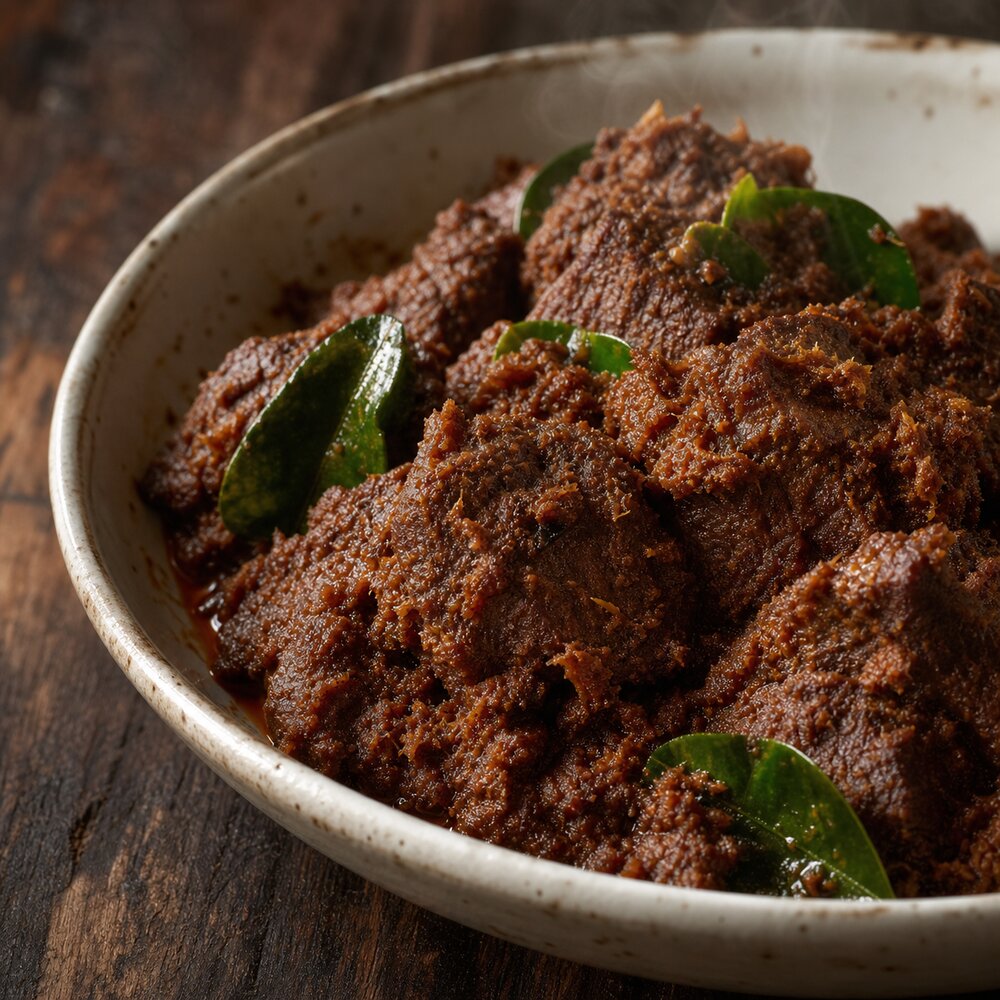
Rendang is beef simmered in coconut milk and spice paste until the liquid cooks away and the meat darkens in the spiced oil left behind. It takes hours and it cannot be rushed. Ours is slow-cooked until dark, tender and deep, and it is the signature dish on our counter.
Kalio is the same idea stopped earlier, while there is still a rich gravy. Our Ayam Kalio is chicken braised slowly in a spiced coconut gravy, a Minang favourite and a good choice if you like your rice wet. If rendang is the one you came for, our rendang guide goes into what to look for.
Gulai: the yellow coconut curries
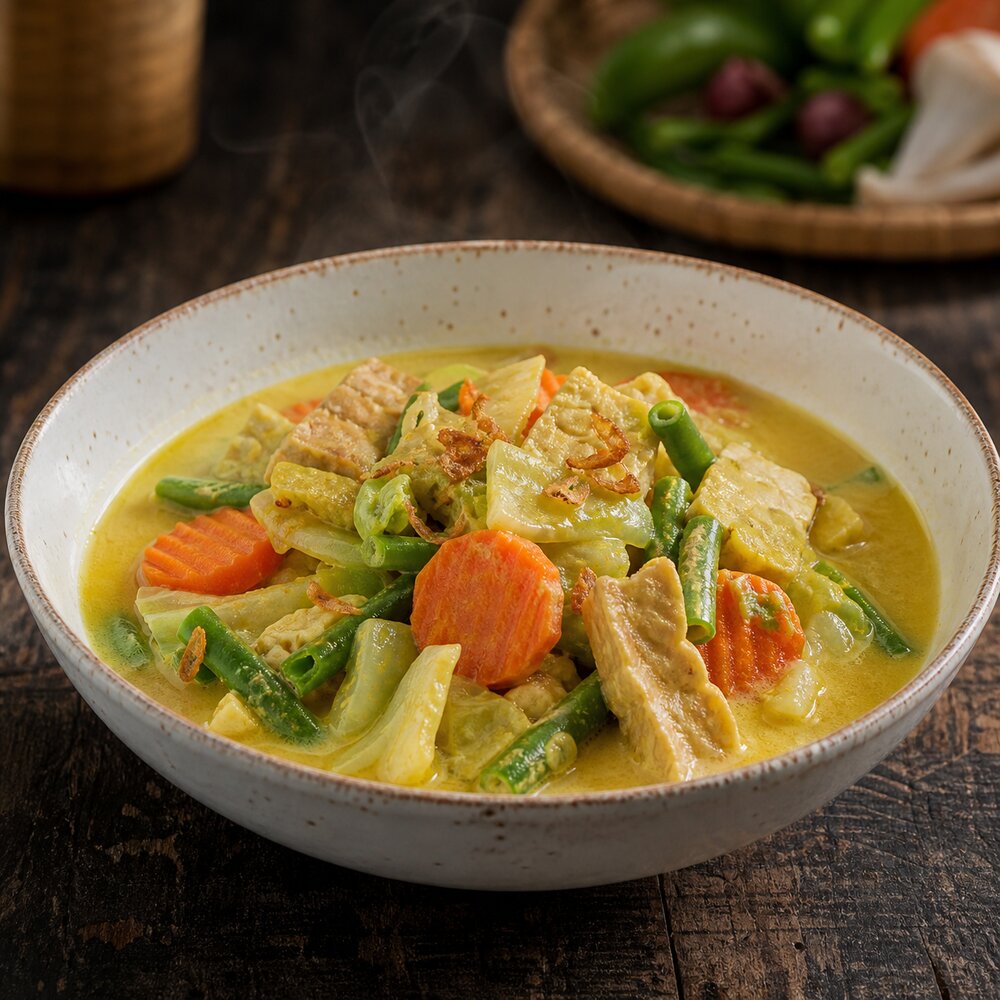
Gulai is the everyday curry of Minang cooking: turmeric, coconut milk and spice paste, lighter and wetter than rendang. Across West Sumatra it is made with fish, chicken, beef, offal or young jackfruit, so the word tells you the style more than the ingredient.
On a nasi padang counter, a spoonful of gulai gravy over the rice is often what pulls the whole plate together. Our counter changes daily with what the kitchen is cooking, so ask what curries are on when you arrive.
Balado and the sambals
Lado is the Minang word for chilli, and balado means cooked in it. Red balado is bright and smoky; green balado, made with green chilli, is fresher and sharper. Sambals sit alongside as condiments or as dishes in their own right.
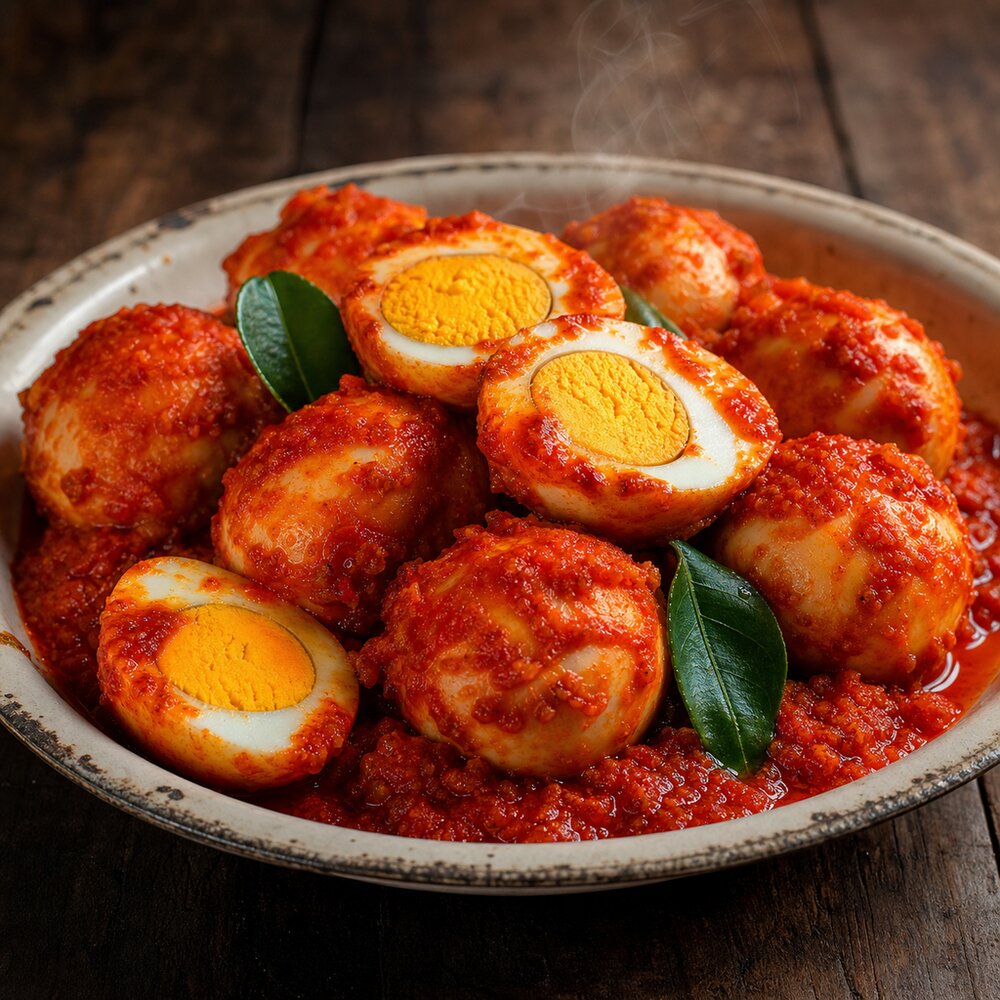
- Telur Balado: boiled eggs blanketed in bright, smoky red chilli.
- Udang Belado with Petai: prawns and petai, the pungent stink bean, stir-fried in a fiery chilli paste. It is part of our catering spread.
- Ikan Belado Hijau: fish in green chilli, which comes in our fish bento set.
- Sambal Goreng: tempeh, tofu and long beans tossed in a glossy chilli sambal.
- Sambal Belacan: chilli and shrimp paste, brightened with lime juice.
The supporting cast
A good plate is not all meat and chilli. These are the dishes that round it out and give your mouth a rest between the richer, hotter bites.
- Sayur Lodeh: a gentle yellow coconut curry of garden vegetables.
- Bagedil: mashed potato patties, coated in egg and fried.
- Ikan Bakar: turmeric-marinated fish, grilled and glazed with sambal.
- Ayam Opor: grilled chicken braised in a rich, spiced coconut-milk broth.
- Keropok Belinjo: a cracker made from sun-dried, fried melinjo seeds.
Putting a plate together, and where to try it
A simple way to start: one rich dish (rendang or kalio), one chilli dish (telur balado or sambal goreng), one vegetable (sayur lodeh), and gravy over the rice. Next time, swap one of them out. If this is your first nasi padang, our first-timer's guide explains how ordering at the counter works.
Sabar Menanti is at 719 North Bridge Road in Kampong Glam, a few steps from the Sultan Mosque, open Tuesday to Sunday from 7:00am to 5:00pm and closed on Mondays. The recipes came from West Sumatra with Haji Marlian Athar in the 1920s and have stayed in the family since. CNA Lifestyle wrote that our nasi padang is "literally worth the wait, from beef rendang to ayam bakar". See the favourites on our menu page.